
Why Loaded Carries Belong in Women’s Functional Training
advertisement
Understanding why loaded carries belong in women’s functional training bridges the gap between gym effort and real-world capability, offering a straightforward way to build resilient posture, grip strength, and core stability.
Carrying heavy groceries up a flight of stairs, hoisting a toddler onto one hip, or hauling luggage through a crowded airport all demand a specific kind of full-body strength that traditional gym machines rarely replicate.
Yet many women spend hours doing isolated bicep curls, crunches, and leg extensions while overlooking one of the most effective movement patterns in exercise science.
Key Takeaways
- Real-World Transfer: Loaded carries directly mimic everyday tasks like carrying bags, children, and boxes, training your body to stabilize under asymmetrical and shifting loads.
- Bone and Grip Health: Weight-bearing walking stimulates skeletal loading—critical for women’s long-term bone density—while building forearm and grip strength linked to healthy aging.
- Deep Core Stabilization: Unlike floor crunches that flex the spine, carries force the deep core muscles to resist twisting and side-bending while you breathe and move.
- Joint-Friendly Intensity: Carries allow you to handle meaningful weights with minimal joint impact and low technical complexity, making them accessible across fitness levels.
- Versatile Programming: With simple variations like suitcase, farmer’s, and front-rack carries, you can target specific weak links in under ten minutes per workout.
What Are Loaded Carries?
A loaded carry is any exercise where you pick up a heavy object—such as dumbbells, kettlebells, a sandbag, or a trap bar—and walk for a set distance or time.
Strength coaches often classify walking under load as a foundational human movement pattern alongside squatting, hinging, pushing, and pulling.
advertisement
Rather than moving a weight through a joint’s range of motion while your torso stays still, loaded carries reverse the challenge.
Your arms, shoulders, and trunk remain locked in a strong, braced position while your legs propel you forward.
Every step creates a brief moment of single-leg balance, forcing dozens of stabilizing muscles around your ankles, hips, spine, and shoulder blades to fire continuously.
Why Loaded Carries Matter Specifically for Women
While loaded carries benefit everyone, they address several physiological priorities and common training gaps that frequently affect women across different life stages.

Supporting Bone Density Through Mechanical Loading
Women face a significantly higher lifetime risk of osteopenia and osteoporosis than men, largely due to smaller average bone mass and hormonal shifts during perimenopause and menopause.
According to the National Institute of Arthritis and Musculoskeletal and Skin Diseases, weight-bearing and muscle-strengthening activities are essential for building and maintaining bone density because bones adapt to the mechanical forces placed upon them.
Loaded carries combine both stimuli at once. Holding external weight increases the compressive ground-reaction forces traveling up through your feet, legs, hips, and spine with every stride, signaling bone tissue to remodel and stay strong without the high impact of plyometric jumping.
Building Functional Core and Pelvic Floor Synergy
Traditional abdominal exercises like sit-ups rely on repetitive spinal flexion, which does not reflect how the core actually protects your back during daily life.
In functional movement, the core’s primary job is anti-movement—preventing your spine from collapsing forward, overarching, or tipping sideways when external forces pull on you.
During a loaded carry, your diaphragm, transverse abdominis, obliques, and pelvic floor muscles must coordinate automatically to keep your ribcage stacked over your pelvis while you walk and breathe.
++ How Hill Walking Challenges Midlife Fitness Without Running
For postpartum women or anyone rebuilding trunk stability, properly dosed carries train this pressure-management system naturally, provided the weight allows smooth breathing without breath-holding or pelvic heaviness.
Strengthening Grip and Upper-Back Posture
Grip strength is far more than a convenience for opening jars; public health research consistently links handgrip strength to overall muscular vitality and long-term mobility.
Furthermore, modern desk work and smartphone use pull the shoulders forward into a rounded posture.
Holding heavy weights at your sides pulls the shoulder blades downward and engages the upper traps, rhomboids, and rotator cuff to keep the shoulder joint centered.
Read more: Why Recovery-Based Fitness Is Growing Among Midlife Women
Over time, regular carrying builds the upper-back endurance needed to sit and stand tall effortlessly.
Delivering High Return With Low Technical Risk
Complex barbell lifts require months of mobility work and technique practice before you can safely load them heavy. Loaded carries have an almost immediate learning curve.
++ How Lifespan Brain Health Changes Across Different Life Stages
If you can hinge down safely to pick up two dumbbells and walk with tall posture, you can start reaping the benefits on day one.
Essential Loaded Carry Variations to Try
Different weight placements shift the stability demands across your body. Rotating through a few core variations ensures balanced development.
| Carry Variation | Equipment Needed | Primary Focus | Best Use Case |
| Farmer’s Carry | Two dumbbells, kettlebells, or a trap bar | Grip strength, upper back, total-body posture | Building heavy baseline strength and conditioning |
| Suitcase Carry | One dumbbell or kettlebell | Lateral core stability (obliques and quadratus lumborum) | Correcting side-to-side imbalances and hip shift |
| Front-Rack Carry | One or two kettlebells or dumbbells | Anterior core, upper-back endurance, breathing under load | Teaching upright torso control and ribcage alignment |
| Overhead Carry | One or two dumbbells or kettlebells | Shoulder stability, thoracic mobility, deep trunk control | Advancing shoulder resilience with lighter weights |
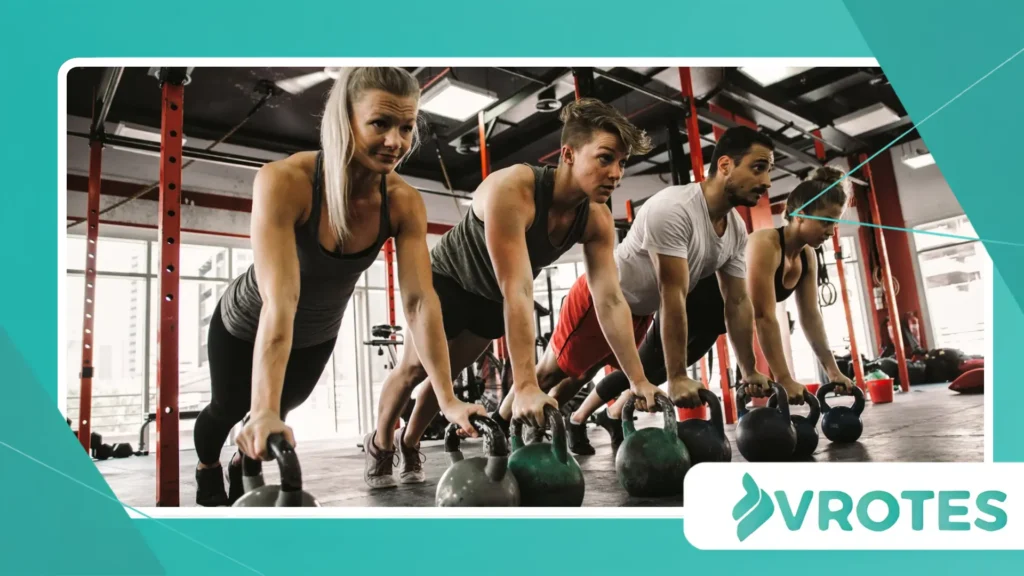
Farmer’s Carry
Hold a moderately heavy weight in each hand with your arms hanging straight at your sides. Stand tall, draw your shoulder blades slightly back and down, and walk smoothly without letting the weights swing against your thighs.
Suitcase Carry
Hold a single weight in one hand while keeping the opposite arm free at your side.
Because the load pulls you toward one side, your opposite obliques and hip stabilizers must work overtime to keep your torso completely vertical. Switch hands halfway through your set.
Front-Rack Carry
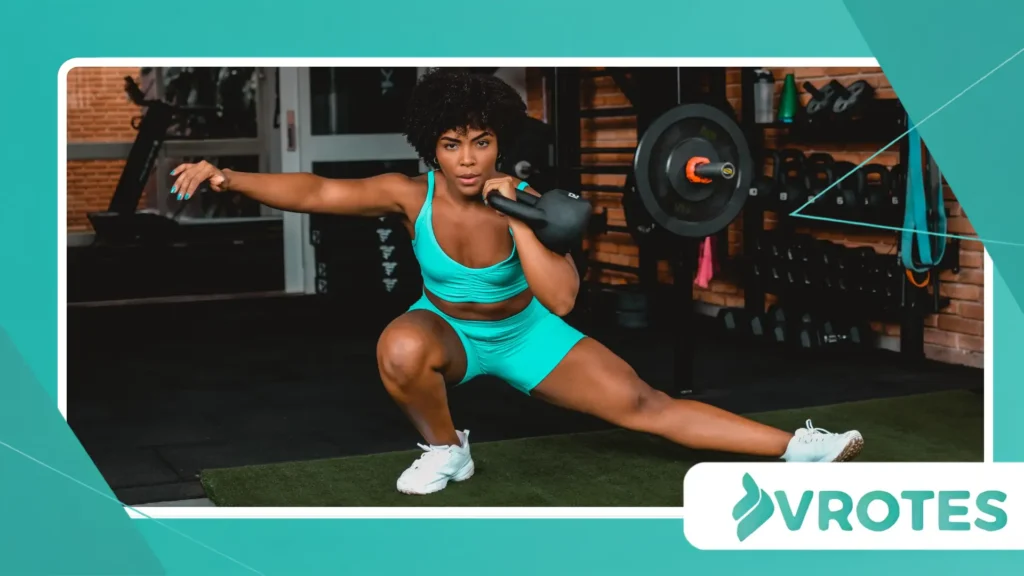
Clean one or two kettlebells to your chest, resting the weights in the pocket between your forearm and bicep with wrists straight and elbows tucked close to your ribs.
This position challenges your upper back to resist rounding forward and teaches you to breathe behind a braced abdominal wall.
How to Program Loaded Carries Into Your Routine
You do not need to overhaul your workout split to include loaded carries. Because they tax your grip and posture without creating severe muscle soreness, they fit easily into existing strength sessions.
Choose Your Placement: Add carries near the end of a strength workout as a finisher, or pair them with an upper-body or lower-body exercise as an active rest movement.
Select the Right Weight: Start with a total load equal to roughly 25% to 40% of your body weight for two-handed farmer’s carries, or 15% to 20% for single-arm suitcase carries. Your posture should stay upright throughout the entire walk.
Track Distance or Time: Aim for 3 to 4 sets of 30 to 45 seconds—or roughly 20 to 40 yards—resting 60 to 90 seconds between sets.
Progress Gradually: Once you can complete all sets without your grip failing, shoulders slumping, or pace rushing, increase the weight by 5 pounds per hand or extend the walking distance.
Before starting a new weighted exercise program, especially if you are pregnant, recently postpartum, or managing osteoporosis, pelvic floor symptoms, or back pain, consult a qualified healthcare provider or physical therapist.
According to the Physical Activity Guidelines for Americans, adults should perform muscle-strengthening activities of moderate or greater intensity involving all major muscle groups at least two days per week, and loaded carries efficiently check multiple boxes within that framework.
Conclusion
Strength training works best when it prepares your body for the physical demands waiting outside the gym.
By challenging your grip, spine, hips, and bones in a natural walking pattern, loaded carries turn simple movement into full-body resilience.
For your next workout, pick up a pair of moderately heavy dumbbells, stand tall, and complete three 30-second farmer’s walks—you will feel the difference from your hands to your heels immediately.
Frequently Asked Questions
How heavy should women lift for loaded carries?
A good starting point for a two-handed farmer’s carry is holding dumbbells that total 25% to 40% of your body weight, divided evenly between both hands.
For example, a 150-pound woman might start with two 20- to 30-pound dumbbells.
The weight should feel challenging enough to require focus, yet light enough that you can walk smoothly without leaning or hunching forward.
Are loaded carries safe during pregnancy or postpartum?
Loaded carries can be a great functional exercise during pregnancy and postpartum recovery because they mirror daily caregiving tasks.
However, intra-abdominal pressure management changes during these stages.
Lighter weights, unilateral suitcase carries, and steady breathing are often preferred, and you should get individualized clearance from your OB-GYN or a pelvic floor physical therapist first.
Do loaded carries count as cardio or strength training?
Loaded carries sit at the intersection of both. Heavy, shorter carries of 20 to 30 seconds primarily build muscular endurance, grip strength, and postural stability, while longer carries of 60 seconds or more with moderate weights noticeably elevate your heart rate and provide a strong metabolic conditioning effect.
How often should I do loaded carries?
Including loaded carries two to three times per week is plenty for most women.
Because walking under load avoids the deep muscle-fiber tearing caused by heavy lowering phases in lifts like squats or lunges, you can recover from carries relatively quickly and perform them consistently alongside your regular workouts.