
Aqua Pilates: Apakah Latihan Berbasis Air Layak Dicoba Setelah Usia 40 Tahun?
iklan
Aqua Pilates offers a practical middle ground that builds core stability without beating up your joints, helping you stay strong, flexible, and pain-free after 40 when high-impact workouts leave knees and hips aching and skipping resistance training accelerates muscle loss and stiffness.
By combining controlled breathing, spinal alignment, and slow, deliberate movement with the natural buoyancy and resistance of water, this format challenges muscles in ways a floor mat cannot.
Whether you are easing back into fitness, managing chronic joint discomfort, or looking for cross-training that protects your spine, moving your Pilates routine into the pool may be one of the smartest adjustments you can make in midlife.
Poin-Poin Penting
- Joint-Friendly Resistance: Water buoyancy unloads body weight from the spine, hips, and knees, while water viscosity provides gentle, multidirectional resistance during every movement.
- Core and Postural Support: Moving slowly against water turbulence forces deep abdominal and back stabilizers to work continuously to keep your torso upright.
- Adaptable Intensity: You control the difficulty by changing your movement speed, surface area, or lever length, making classes suitable for beginners and seasoned athletes alike.
- Cardiovascular and Mental Benefits: Beyond muscular endurance, aquatic exercise supports heart health, mobility, and stress reduction without overheating the body.
- Smart Precautions Matter: Because water reduces gravitational load, Aqua Pilates works best alongside weight-bearing activities to maintain bone density over time.
What Is Aqua Pilates and How Does It Work?
Aqua Pilates translates foundational mat and reformer Pilates principles into an aquatic environment, typically in water ranging from waist to chest depth.
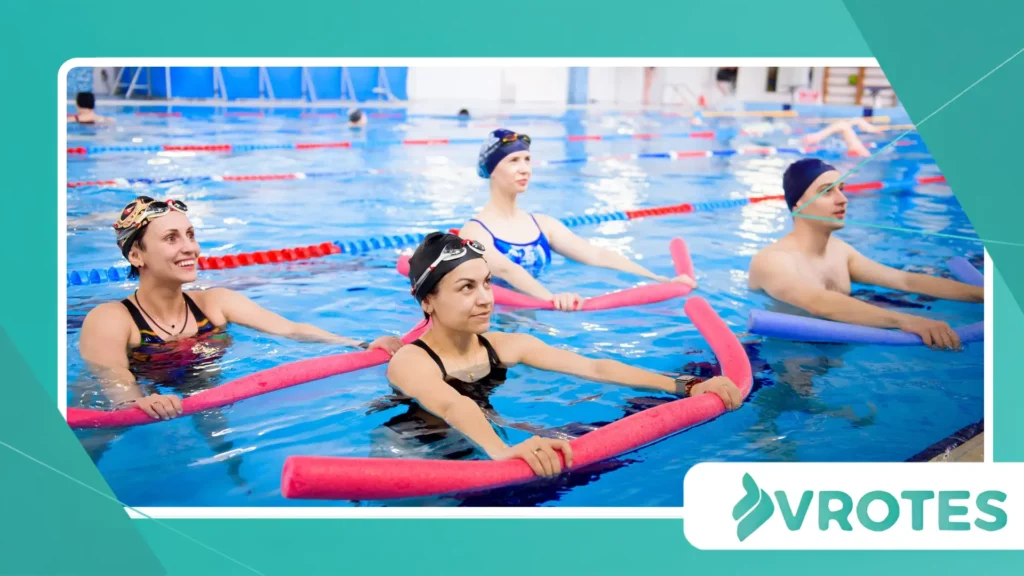
Instead of lying on a padded mat or using metal springs, participants stand, float, or suspend themselves using pool walls, foam noodles, or aquatic dumbbells to execute slow, precise exercises.
iklan
Traditional Pilates emphasizes six core principles: concentration, control, center, flow, precision, and breathing.
In a pool, those principles remain identical, but the physical environment changes how your nervous system and muscles respond.
Water creates drag in every direction, meaning there is no “resting” phase on the return half of a repetition. When you sweep your leg forward or press your arms down, you work against resistance both ways.
Unlike high-energy water aerobics, which often relies on bouncing, jogging, and fast tempo music, water-based Pilates prioritizes slow, controlled alignment.
You focus on stabilizing your pelvis, lengthening your spine, and coordinating diaphragmatic breathing with deliberate limb movements.
Why Water-Based Pilates Appeals to Adults Over 40
Once you pass 40, recovery takes longer, connective tissues lose some elasticity, and old injuries tend to speak up during high-impact workouts.
Itu Pusat Pengendalian dan Pencegahan Penyakit (CDC) notes that water-based exercise improves physical and mental health while supporting people managing chronic conditions like arthritis.
Reduced Joint Compression
When you stand in chest-deep water, buoyancy supports a substantial portion of your body weight, drastically reducing compressive forces on the lower spine, hips, knees, and ankles.
++ Mengapa Latihan Membawa Beban Penting dalam Latihan Fungsional Wanita?
Movements that might trigger sharp discomfort on a gym floor—such as single-leg balances, deep hip flexion, or spinal rotation—become accessible and smoother in the pool.
Built-In Balance and Core Engagement
Water is never completely still. Even gentle movements from neighboring swimmers create subtle currents that challenge your equilibrium.
To prevent your torso from drifting or tipping, deep stabilizing muscles—including the transverse abdominis, pelvic floor, and spinal extensors—must fire continuously.
Baca selengkapnya: Bagaimana Mendaki Bukit Menantang Kebugaran di Usia Paruh Baya Tanpa Berlari
Emerging research on aquatic Pilates in midlife and older women also links water-based Pilates training to improved spinal alignment and functional performance.
Improved Mobility Without Force
Warm or moderately heated therapy pools help relax tight muscles and ease joint stiffness, allowing you to explore a fuller range of motion safely.
Because water slows down momentum, you cannot “cheat” through exercises using speed, which lowers the risk of sudden muscle strains.
Aqua Pilates vs. Mat Pilates vs. Water Aerobics
Choosing the right format depends on your fitness goals, joint comfort, and preferred workout pace. The comparison below outlines how Aqua Pilates stacks up against two closely related options.
| Fitur | Aqua Pilates | Traditional Mat Pilates | Standard Water Aerobics |
| Dampak Bersama | Very low; buoyancy unloads joints | Low, though wrist, neck, or knee pressure can occur | Low, though bouncing or jumping adds light impact |
| Fokus Utama | Core stability, posture, alignment, and controlled strength | Core strength, spinal mobility, and muscular endurance | Cardiovascular endurance, rhythm, and full-body stamina |
| Movement Pace | Slow, deliberate, and breath-led | Slow to moderate, emphasizing precision | Moderate to fast, often set to upbeat music |
| Resistance Source | Multidirectional water drag and foam equipment | Body weight, gravity, and small props | Water drag, jogging, and high-repetition cardio moves |
| Balance Challenge | High, due to constant water turbulence | Moderate, relying on gravity and base of support | Moderate, focused on dynamic upright movement |
Common Aqua Pilates Exercises You Will Encounter
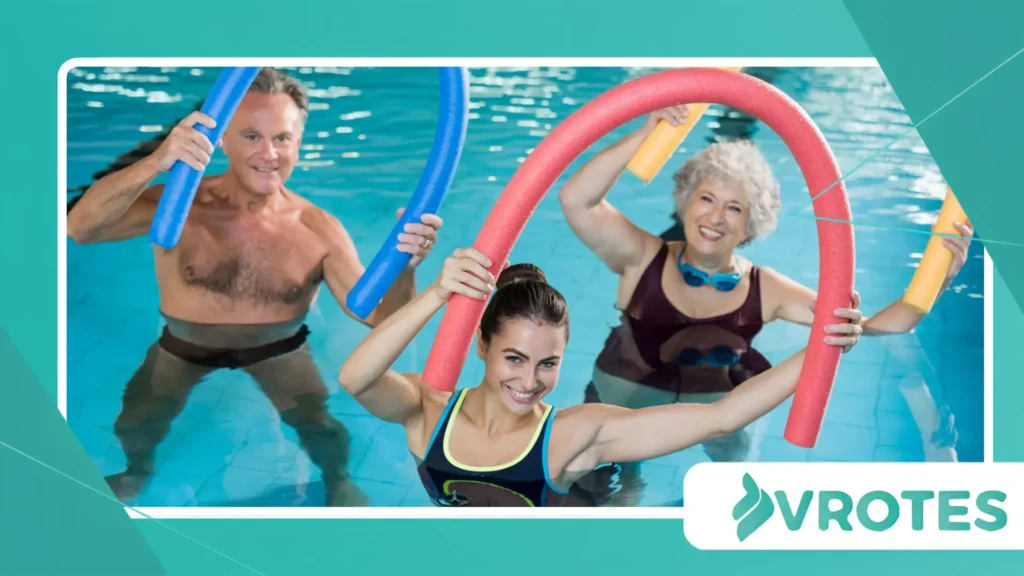
Most classes follow a structured progression that warms up the spine, activates the core, strengthens the upper and lower body, and finishes with gentle stretching.
You do not need to be an expert swimmer to participate, as most routines keep your head above water in the shallow end.
Pool-Edge Roll-Downs: Standing with your back near the pool wall, you articulate your spine down one vertebra at a time while exhaling, using water buoyancy to support your torso before stacking back up tall.
Single-Leg Circles: Holding the pool gutter lightly for stability, you draw slow circles with one leg while keeping your pelvis completely level against the water’s resistance.
Standing Hundred: Floating slightly with knees bent or standing in a grounded squat, you pump straight arms briskly just beneath the water surface while taking steady, five-count inhales and exhales.
Noodle Teaser: Sitting balanced on a foam pool noodle, you engage your abdominals to extend both legs forward into a V-shape without letting the noodle slip out beneath you.
++ Bagaimana Komunikasi Usus-Otak Dapat Mempengaruhi Kesejahteraan Emosional
Mermaid Side Stretch: Standing sideways to the wall, you sweep one arm overhead and arc your ribcage laterally, feeling a supported decompression along the waist and shoulders.
Limitations to Keep in Mind Before Jumping In
While Aqua Pilates offers clear advantages for joint protection and core control, it is not a complete standalone fitness plan on its own. Understanding its limits helps you build a smarter weekly routine.
First, buoyancy is a double-edged sword for bone health. Because water reduces gravitational load, aquatic workouts provide less mechanical stimulus for building or maintaining bone mineral density than weight-bearing land exercise.
Itu Institut Nasional Penuaan (NIA) recommends combining endurance, muscle-strengthening, flexibility, and balance activities each week to protect overall physical function as you age.
Pairing Aqua Pilates with brisk walking, strength training, or stair climbing gives your bones the impact they need.
Second, pool temperature and facility access matter. A chilly lap pool kept at 78°F may feel refreshing during vigorous swimming, but slow-paced Pilates movements can leave you shivering if the water is too cold.
Look for recreation centers, YMCAs, or physical therapy pools heated between 82°F and 88°F for optimal muscle comfort.
Finally, water hides sweat and fatigue. It is easy to underestimate how hard your muscles are working until you climb out of the pool and feel gravity return.
How to Get Started Safely After 40
If you are ready to test the water, a few practical steps will help you get the most out of your first session:
Check in with your doctor if needed: If you have cardiovascular conditions, uncontrolled blood pressure, balance disorders, or recent joint surgery, ask your physician or physical therapist for clearance before starting.
Choose the right class level: Look for classes labeled “Beginner Aqua Pilates,” “Warm Water Core,” or “Joint-Friendly Pilates” rather than advanced deep-water sessions that require float belts.
Bring basic gear: Wear a supportive, comfortable swimsuit that stays put during twisting and leg lifts. Water shoes with grippy soles improve traction on slick pool floors and prevent foot cramps.
Hydrate before and after: Even though you are surrounded by water, your body still loses fluids during a 45- to 60-minute workout. Keep a water bottle on the pool deck.
Start with one or two sessions a week: Give your core and stabilizing muscles 48 hours to recover between early classes before increasing frequency.
Kesimpulan
Aqua Pilates is well worth trying after 40, especially if you want to build core strength, improve posture, and move freely without aggravating sensitive joints.
While it should complement rather than replace weight-bearing exercise for bone health, it delivers an effective, low-stress workout that meets your body where it is today.
Start by checking local community pools, YMCAs, or aquatic therapy centers for a beginner drop-in class, and see how your body feels after a few sessions in the water.
Pertanyaan yang Sering Diajukan
Do I need to know how to swim to do Aqua Pilates?
No. Most Aqua Pilates classes take place in shallow, waist- to chest-deep water where you can easily stand with your head well above the surface.
Let your instructor know if you are uncomfortable in deep water so they can offer wall-supported modifications.
Is Aqua Pilates good for lower back pain or arthritis?
Many adults with mild-to-moderate osteoarthritis or chronic lower back stiffness find water-based exercise comfortable because buoyancy takes pressure off the spine and weight-bearing joints.
However, because back and joint conditions vary widely, consult a doctor or physical therapist to confirm which movements suit your specific diagnosis.
How many calories does an Aqua Pilates class burn?
Exact calorie burn varies based on body weight, water temperature, and how forcefully you push against water resistance.
Because Aqua Pilates focuses on slow control and core stability rather than continuous cardio, it generally burns fewer calories than lap swimming or vigorous water aerobics, making its primary value muscular endurance, mobility, and postural control.
What should I wear to my first Aqua Pilates class?
Choose a snug, athletic one-piece swimsuit or fitted swim shorts and rash guard that will not shift during leg lifts or torso twists.
Bringing lightweight aquatic shoes is also helpful for stability on the pool floor and safety on wet locker-room surfaces.
++ Why aquatic exercise is making a splash with health conscious adults
++ Aqua pilates exercises: Complete guide to an effective workout