
Menopause and Skin Hyperpigmentation
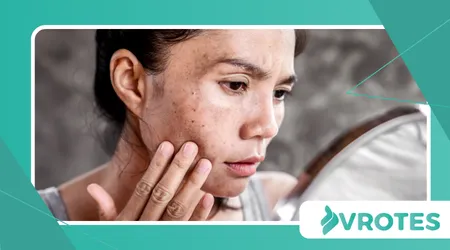
Navigating the intersection of Menopause and Skin Hyperpigmentation often feels like a sudden betrayal by a mirror that previously told a different story.
Anúncios
As estrogen exits the stage, it takes with it the regulatory calm that once kept your skin’s pigment-producing cells in check, leaving behind a complex map of dark patches and uneven tones.
Summary of Insights
- The hormonal collapse that triggers “melanocyte madness.”
- Why thinning skin makes older damage more visible.
- The 2026 standard for non-hydroquinone brightening agents.
- Deciphering the role of light—from the sun to your smartphone.
- Balancing systemic hormone therapy with local skin health.
What is the Connection Between Menopause and Skin Hyperpigmentation?
The transition into menopause marks a profound biological shift where the decline of estrogen disrupts the skin’s structural integrity and its internal messaging system.
Estrogen is essentially a peacemaker for the cutaneous environment, and its absence allows the pituitary gland to overproduce hormones that signal for more melanin.
This hormonal chaos is precisely why Menopause and Skin Hyperpigmentation are so frequently linked in clinical settings, manifesting as melasma or age spots that seem to appear overnight.
Anúncios
It is a frustrating reality for many, as the skin simultaneously becomes thinner and less resilient to the very inflammation that drives these pigment changes.
Rather than a simple sign of aging, these spots are often an inflammatory response to a lack of hormonal protection.
In 2026, we view this not just as a cosmetic flaw, but as a clear indicator of a compromised skin barrier that requires a sophisticated, multi-layered defense.
Why Does Hormonal Fluctuation Cause Dark Spots?
During the erratic years of perimenopause, the delicate balance between estrogen and progesterone destabilizes, which can inadvertently “turn on” the cells responsible for skin color.
These melanocytes become hypersensitive, reacting aggressively to even a few minutes of incidental sun exposure that wouldn’t have caused a flare-up a decade earlier.
The skin’s “memory” also plays a role here; deep-seated damage from our twenties often migrates to the surface as the dermal-epidermal junction weakens.
It is a common misconception that these spots are entirely new, when they are frequently the ghosts of past summers finally becoming visible through thinner, menopausal skin.
Furthermore, a decrease in natural skin lipids means the barrier is constantly “leaky,” leading to low-grade chronic inflammation.
This “inflammaging” sends constant, erroneous signals to produce pigment as a protective shield, creating a cycle of darkening that is difficult to break without addressing the underlying barrier health.
How Does Estrogen Deficiency Affect Melanin Production?
Estrogen acts as a natural brake on tyrosinase, the enzyme that serves as the primary engine for melanin synthesis.
When this hormonal brake is released, the engine runs hot, leading to the erratic, blotchy deposits of pigment that characterize the menopausal face, particularly on the forehead and upper lip.
This deficiency also depletes the skin’s reservoir of natural antioxidants, leaving it defenseless against the oxidative stress caused by modern life.
Pollution and high-energy visible (HEV) light—the blue light from our screens—become far more damaging when the skin lacks the estrogen-driven capacity to repair itself.
++ How Menopause Alters Taste for Spicy or Sweet Foods
Current research in 2026 highlights that managing Menopause and Skin Hyperpigmentation requires more than just “lightening” the skin; it demands a restoration of the skin’s internal antioxidant “bank.”
Without this systemic support, topical treatments often provide only temporary relief before the pigment inevitably returns.

Which Ingredients Effectively Treat Menopausal Pigmentation?
The approach to treating mature skin has shifted away from harsh bleaches toward ingredients that gently interrupt the pigment pathway while soothing the skin’s surface.
Read more: Menopause and Restless Leg Syndrome
Efficacy of Modern Topical Agents
| Ingredient | Primary Function | Clinical Context |
| Cysteamine | Pigment Inhibitor | The gold standard for resistant melasma. |
| Tranexamic Acid | Anti-inflammatory | Excellent for redness-associated pigment. |
| Retinaldehyde | Cellular Renewal | Less irritating than traditional Retin-A. |
| Niacinamide | Barrier Support | Prevents pigment from reaching the surface. |
| Stabilized Vit C | Antioxidant | Essential for neutralizing daily UV damage. |
Cysteamine, in particular, has gained traction in 2026 as a safer, more sustainable alternative to hydroquinone, which can sometimes cause permanent darkening if used incorrectly.
By focusing on molecular pathways rather than just surface exfoliation, these ingredients respect the fragile nature of thinning, mature skin.
When Should You Seek Professional Dermatological Procedures?
There is a point where home-care reaches its limit, and the deep-seated “dermal” pigment requires the precision of clinical technology.
Modern lasers, such as Picosure or low-energy fractional devices, are now specifically programmed to treat the skin without triggering the heat-induced rebound pigment often seen in the past.
Chemical peels have also evolved; we no longer aim for aggressive “shedding” but rather for metabolic signaling that encourages the skin to behave like its younger self.
However, professional treatments should always be a secondary step, built upon a solid foundation of daily sun protection and a stabilized skin barrier.
The American Academy of Dermatology notes that professional intervention is most successful when the patient has already addressed the inflammatory triggers in their daily routine.
It is a collaborative effort between the clinical procedure and the patient’s commitment to a rigorous, non-negotiable protection strategy.
What are the Best Preventive Habits for Mature Skin?
In the context of Menopause and Skin Hyperpigmentation, an ounce of prevention is truly worth a pound of expensive laser treatments.
The most significant shift in 2026 is the move toward tinted mineral sunscreens containing iron oxides, which shield the skin from visible light that standard sunscreens ignore.
Dietary choices act as an “internal sunscreen,” where nutrients like lycopene and astaxanthin provide a baseline of protection against UV-induced redness and subsequent darkening.
Read here: Menopause and Interval Walking for Bone and Heart Health
These lifestyle adjustments create a more resilient cellular environment, making the skin less likely to overreact to the inevitable environmental stressors we face daily.
How Does Hormone Replacement Therapy (HRT) Impact the Skin?
The intersection of HRT and skin tone is often misunderstood, as systemic hormones can be a double-edged sword for the complexion.
For many, HRT restores the hydration and thickness that prevents spots from looking so prominent; for others, it can occasionally trigger the very melasma they are trying to avoid.
If you are navigating Menopause and Skin Hyperpigmentation while on hormone therapy, it is helpful to monitor your skin’s response during the first few months of treatment.
Often, a simple adjustment in the delivery method—moving from a pill to a patch, for instance—can stabilize the skin’s pigment response while still providing the systemic benefits.

Final Reflections
The shifts we see in our skin during this transition are not failures of vanity but biological signals of a body in flux. By combining 2026 dermatological science with a gentle, consistent approach to protection, it is entirely possible to navigate these changes with confidence.
Resilience is built through the daily choices of protection and the grace to let the skin heal at its own pace.
For a deeper look at the hormonal science behind these transitions, the North American Menopause Society offers excellent evidence-based resources.
FAQ
1. Why does my hyperpigmentation look worse even when I stay out of the sun?
Heat and visible light (from stoves or screens) can trigger pigment just as much as direct UV rays, especially when estrogen levels are low.
2. Is it safe to use Retinol on thinning menopausal skin?
Yes, but the key is “low and slow.” Using a buffered retinaldehyde or a formula with ceramides helps gain the benefits without the barrier-damaging irritation.
3. Will the dark patches go away once I am post-menopausal?
They rarely disappear entirely on their own because the “memory” of the damage remains, but they become much easier to manage once hormones stabilize.
4. Does “blue light” from phones really cause spots?
Yes, research shows that HEV light can stimulate melanocytes, particularly in those already prone to hormonal hyperpigmentation or melasma.
5. Can I use Vitamin C and Retinol together?
It is best to split them up: use Vitamin C in the morning for protection and Retinol at night for repair to avoid overwhelming the skin.